
Motorcycle Insurance
Motorcycle Insurance in Canada
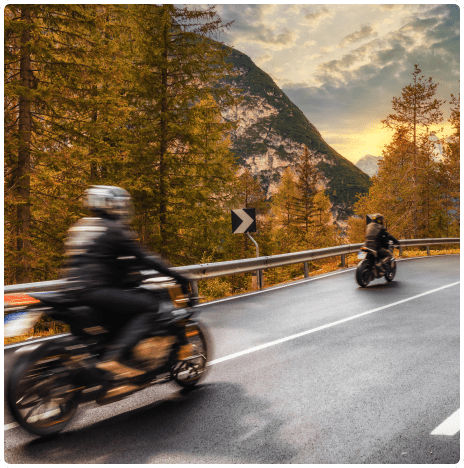
You won’t get it if you’re not a motorcyclist. Freedom on the road is incomparable to anything that your standard vehicle could provide. Whether you use your bike for your daily work commute or sheer joy, motorcycle riders know it’s still something to protect with the right motorcycle insurance broker.
Motorcycle insurance is similar to auto insurance, but what is being insured is very different. We all have different usages for our bikes, whether it’s taking them to work or using them on the weekend for joyrides. However, understanding how your coverage protects you and additional “tidbits” about your insurance can go a long way.
Every province has its own regulations on what coverage is required for motorcycle insurance. If you’re feeling overwhelmed, Sharp’s motorcycle insurance brokers have your back. Your ride is calling you, but we want you to get the right insurance first. We’ll help you find coverage that fits your motorcycle insurance needs and budget.
What Does Motorcycle Insurance Cover?
Similar to standard vehicle insurance, having motorcycle insurance is a necessity before you ride. Your basic motorcycle insurance policy is likely to include the mandatory standard coverage per your provincial requirements, but you also have the option to purchase additional coverage and insurance products based on your needs.
Is Motorcycle Insurance Mandatory in Canada?
Yes, motorcycle insurance is mandatory in all of Canada’s provinces and territories. You can’t ride on public roads without having motorcycle insurance. You must have an active policy to legally register your bike, obtain a licence plate, or renew your registration.
Mandatory Motorcycle Insurance Coverage:

Third-party liability
This mandatory third-party liability coverage protects you from unexpected legal fees if you’re in a motorcycle accident and cause bodily injury or damage to someone else’s property.

Direct compensation property damage
This upset coverage and property damage coverage offer financial security when you are not at fault in an at-fault accident claim made against you.

Accident benefits
This coverage protects you, your passenger, other drivers, their passengers and pedestrians if they are injured or even killed in an accident that you were involved in. This can cover medical expenses, rehab costs and funeral expenses.

Uninsured/underinsured insurance
This coverage option helps you when you get into an accident with an uninsured driver or someone underinsured. It may also cover you in a hit-and-run accident.
Optional Motorcycle Coverage in Canada
- Comprehensive coverage: Not all damages occur because of a collision. Comprehensive coverage is designed to insure your motorcycle for non-collision-related events, including falling objects, theft, vandalism, hail, and fire, and can help cover replacement costs for motorcycle accessories damaged in those events.
- Collision coverage: This insurance covers your motorcycle in the event of a collision with another vehicle or another object.
- All perils coverage: All perils coverage is the broadest level of coverage you can purchase for any motorized vehicle, combining both collision insurance and comprehensive coverage.
Chat with a motorcycle insurance broker today about the best motorcycle insurance products for your lifestyle, riding history, and budget, including roadside assistance coverage and adequate coverage for your motorcycle accessories.
How Much Does Motorcycle Insurance Cost in Canada?
The cost of motorcycle insurance in Canada ranges from $1,500 to $3,500 per year, with an average of $2,500 annually. Cost varies based on your province, riding experience, the type of bike, and whether you require high-risk motorcycle insurance.
Regions play a huge role in determining the cost:
- Ontario: Considered the most expensive province for motorcycle insurance, with average rates between $1,600 and $3,500 per year.
- Alberta: Affordable rates that range between $500 and $1,000 per year.
- British Columbia: Riders pay between $800 and $1,500 per year through ICBC.
- Quebec: On top of the most affordable provinces. Quebec riders pay between $350 and $800 per year.
What Factors Impact Your Motorcycle Insurance Rate?
Like car insurance, motorcycle insurance costs vary from insurer to insurer, from motorcycle policy to motorcycle policy, and across insurance providers. Your insurance rate may also vary based on what province you live in.
On average, Canadian motorcyclists pay anywhere from $1,500 to $3,500 per year for their motorcycle insurance.
According to recent data, Ontario riders pay an average of $1,600 a year for motorcycle insurance, while riders in Alberta often pay only a few hundred dollars thanks to the province’s seasonal rating system.
Get a Quote
How to Lower Your Motorcycle Insurance Premium
To lower your motorcycle insurance premium in Canada, you should take the following actions:
- Take a Safety Course: If you’re a new rider, completing a government-approved motorcycle safety course qualifies you for premium discounts.
- Bundle Your Policies: If you bundle your home insurance, motorcycle, and car insurance policies with one provider, there is a great chance you will get a multi-policy discount.
- Pay Annually: Paying upfront annually instead of monthly is considered a loyal action to many insurance providers.
- Store Your Bike in Winter: Switching to storage insurance during the off-season drops collision and liability coverage while keeping protection against theft, fire, and weather damage.
- Choose the Right Bike: Choosing a smaller, standard, or touring bike costs less to insure than a high-performance sports bike.
- Shop Around: Insurance providers give various rates, so compare the quotes through a broker to help you find the best deal.
What Does Motorcycle Insurance Not Cover?
Standard motorcycle insurance policies don’t cover routine wear and tear, commercial use, and organized racing. Also, it excludes custom aftermarket parts, such as accessories or modifications you add after purchase, which are generally not covered unless you add them under a separate insurance policy for custom parts coverage.
Here are some common motorcycle insurance coverage exclusions:
Riding Activities
- Track and Racing Events: Motorcycle insurance doesn’t cover timed events, speed tests, or any riding on a closed-circuit track.
- Commercial Use: If you use your motorcycle for deliveries or courier work, you will need a separate commercial policy.
- Unlisted Riders: Anyone riding your bike who is not listed on your policy will not be covered.
Personal and Passenger Limitations
- Your Own Medical Bills: Your own medical bills require separate medical coverage, as liability coverage only pays for injuries or damage you cause to others.
- Passenger Injuries: Coverage for a passenger’s injuries is not always automatic and depends on your specific policy.As mentioned earlier, a standard car insurance policy does not cover motorcycle riders, so without optional coverage, your own medical costs from serious injuries will not be included.
Policy-Specific Situations
Riding a Friend’s Bike: If you had an accident while riding someone else’s bike, your own policy will not cover the damage caused to this bike.
No Valid Licence: Your claim can be denied if you ride without a proper licence or endorsement.
How to File a Motorcycle Insurance Claim
To file a motorcycle claim in Canada, you should start documentation as soon as possible, contact your insurer, and cooperate with an adjuster.
Here are the four easy steps you should follow when filing a motorcycle insurance claim:
Step 1: Document the Scene
- Make sure everyone involved is safe and call 911 if anyone is injured.
- Collect the other driver’s details, such as his name, contact information, licence number, and insurance details.
- Take photos of the damage, licence plates, and the surrounding area, including road and weather conditions.
- Get the names and phone numbers of any witnesses.
Step 2: File a Police Report
It’s legally required to report a collision if someone is injured or if property damage exceeds a set threshold, which is typically between $1,000 and $2,000 based on your province. Some provinces require you to visit a Collision Reporting Centre within 24 hours of the accident.
Step 3: Contact Your Insurance Provider
Call your insurance broker as soon as possible, as many insurance providers have a deadline for reporting a claim, so make sure not to delay. Be ready with all the information they need, like your policy number, and prepare all the information they need on the incident.
Step 4: Work with an Adjuster and Arrange Repairs
An adjuster will be assigned by your insurer to make a full review of the accident and determine fault based on your province’s rules. Once the claim is assessed, take your bike to an approved repair shop. Many insurers work with a network of preferred shops, which can make the repair and payment process faster and more straightforward.
Main Factors That Affect Your Motorcycle Insurance Premium:
- Your location: Where you live is a huge factor in your overall insurance rates. If you live in an urban area that sees a lot of crime or high-collision rates, your prices may be higher.
- Your bike: The make, model and cost of your motorcycle helps to determine your premium.
- Driving history: Do you have speeding tickets and other infractions? Your driving record and riding history will both affect your rate, and a new rider will typically pay more than experienced riders with a clean record.
- Demographics: Your age, occupation and your marital status can impact your insurance rates based on your risk. Younger drivers, for example, are at higher risk to the insurer so their insurance rates will often be higher.
- Driving habits: How often you drive every week will determine your insurance rate.
- Coverage limits and deductibles: Do you have just a basic insurance policy or one with all the fixings? The more complex your coverage is and the higher your limits are, the more expensive your insurance may be.
- Eligible discounts: Different insurance providers may offer different ways to save money, including low mileage, bundling home and auto insurance, loyalty programs, safety gear credits, and more, though exclusions apply depending on your motorcycle policy.
Discuss your motorcycle insurance needs with one of our skilled brokers to find adequate coverage, whether you ride touring bikes, a commuter, or a sport bike, and to make sure you’re never caught filing a motorcycle insurance claim without a complete description of what’s covered. If you’d like a more accurate estimate of your premium, get a free motorcycle insurance quote online with Sharp Insurance today.
Motorcycle Insurance Canada FAQs
If you’ve informed your broker of the modifications, then they will inform you if you are covered or not. If your modifications have manipulated the safety of your bike, increasing its horsepower, or potentially affecting how it drives, your modifications may not be covered. You may also need a separate insurance policy known as accessories and upgrades coverage to protect parts that may need to be repaired or replaced following a claim.
Loss of use is essentially payment for a rental bike if your bike ends up in the shop for repair following an unexpected loss. The actual terms of loss of use coverage can vary from insurer to insurer, but typically a policy may provide coverage for a rental bike for a certain duration or until the bike has been repaired. In some situations, loss of use may have a dollar limit amount which, given the hike in rental costs nowadays, can be quickly capped out. Talk with a broker about loss of use and, if applicable, whether to increase its limits.
Generally, the bikes that are the costliest to insure are the fancier, higher-end models with more horsepower. Insurance rates for different motorbike models will also vary based upon theft rates and safety ratings. Typically, sport bikes will be the most expensive to insure since they feature higher top-line speeds. A Suzuki Hayabusa will probably be far more expensive to insure than a moped or a Harley Davidson V-Rod. If cost is a concern, you may want to err on the side of a more middle-of-the-road bike that has moderate horsepower and no luxury features or tech.
Yes, motorcycle insurance is required any time you ride on public roads, even seasonally. If your bike sits unused in winter, switching to storage insurance can help keep your costs down.
No, your car insurance policy does not cover you on a motorcycle. A motorcycle requires its own separate insurance policy, as the two vehicles are insured differently.
Yes, new riders can get motorcycle insurance. Your premiums will likely be higher to start since you have limited riding history, but completing a government-approved safety course can help bring your rate down.
Collision coverage pays for damage to your bike from a crash with another vehicle or object. Comprehensive coverage pays for non-collision damage, such as theft, fire, vandalism, or hail. Many riders choose to carry both.
It depends on your policy. Passenger injury coverage is not always automatic, so it is worth confirming with your broker that your policy includes it before you take anyone for a ride.
Areas We Serve
Alberta| Calgary | Edmonton | Fort McMurray| Grande Prairie| High Prairie|
Lethbridge| Medicine Hat | Red Deer| Whitecourt
Ontario| Kanata| Ottawa| Toronto
Manitoba | Saskatchewan| British Columbia
To Serve You Best,
We Work Hard to Partner with The Best Insurance Companies!



Get a Free Motorcycle Insurance Quote with Sharp Insurance
The freedom of a motorcycle. Just you and the open road. Your ride is calling you, but it’s never worth going out on the road until you’re properly insured. Get a free, no-obligation quote today.
As a Sharp customer, the MySharp app lets you access your insurance documents 24/7, including your pink card. You can also submit a claim, view payment details and submit a policy change request.
Get a Free Motorcycle Insurance Quote with Sharp Insurance
The freedom of a motorcycle. Just you and the open road. Your ride is calling you, but it’s never worth going out on the road until you’re properly insured. Get a free, no-obligation quote today.
As a Sharp customer, the MySharp app lets you access your insurance documents 24/7, including your pink card. You can also submit a claim, view payment details and submit a policy change request.